Contract Management Software in 2026: Best Tools, Features, Benefits, Pricing & Complete Guide
Businesses handle multiple contracts every day, including vendor agreements, customer contracts, employee documents, partnership agreements, service deals, and legal paperwork. Managing these documents manually can become difficult as a company grows. Missed deadlines, lost files, outdated agreements, and approval delays can create financial and operational problems.
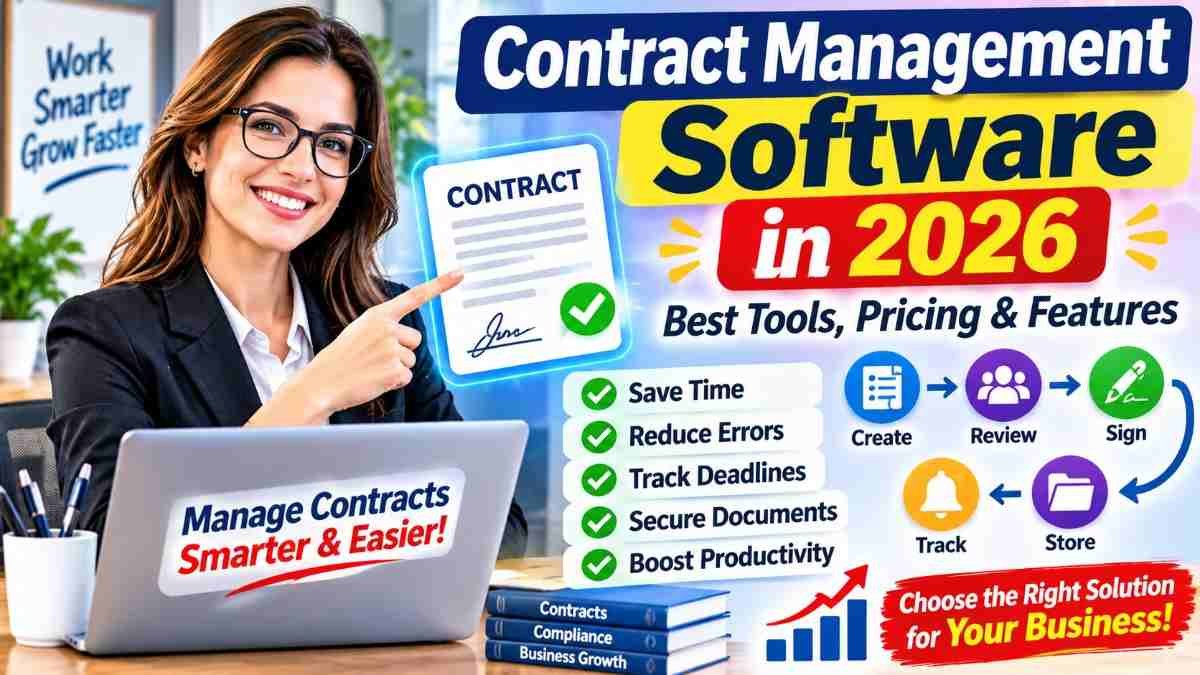
This is why Contract Management Software is becoming an essential business tool in 2026. It helps companies create, organize, review, sign, track, and manage contracts from a centralized digital platform.
Whether you run a small business, startup, consulting agency, real estate company, healthcare organization, or large corporation, contract management software can simplify paperwork and improve business efficiency.
In this guide, we will explain what contract management software is, how it works, its benefits, features, costs, and the best platforms businesses can consider.
What Is Contract Management Software?
Contract management software is a digital platform designed to manage contracts throughout their entire lifecycle. It helps businesses handle contract creation, negotiation, approvals, electronic signatures, storage, renewal reminders, and tracking.
Instead of saving documents across email inboxes, folders, spreadsheets, and different computers, businesses can use one centralized system to manage important agreements.
Most contract management platforms offer features such as:
- Contract creation using templates
- Document editing and collaboration
- Approval workflows
- Electronic signatures
- Contract storage and search
- Expiration and renewal reminders
- Permission management
- Audit trails
- Reporting and analytics
- AI-powered contract review
The goal is to make contract processes faster, more organized, and easier to monitor.
Why Businesses Need Contract Management Software in 2026
Contract-related work can consume hours of employee time. Businesses often need to review legal documents, collect signatures, approve changes, track obligations, and monitor renewal dates.
Contract management software can help address these challenges.
1. Save Time and Improve Productivity
Employees no longer need to search through hundreds of emails or manually prepare the same agreement repeatedly. Templates and automated workflows can speed up contract preparation and approval.
2. Reduce Human Errors
Manually entering contract details can result in mistakes. Digital tools can standardize documents, reduce repetitive typing, and make it easier to identify missing information.
3. Prevent Missed Renewals
Many contracts automatically renew unless canceled within a specific period. Renewal notifications help businesses avoid missing important deadlines or paying for unwanted services.
4. Improve Security
Businesses can restrict access to sensitive contracts based on employee roles. Some platforms offer encryption, audit logs, access permissions, and other security features.
5. Make Collaboration Easier
Legal departments, managers, finance teams, HR employees, and external partners can review documents and communicate within organized workflows.
Best Contract Management Software in 2026
There are several contract management platforms available for companies of different sizes. The best choice depends on business requirements, budget, document volume, integrations, and complexity.
1. DocuSign CLM
DocuSign CLM provides tools for managing contracts, workflows, approvals, electronic signatures, and contract processes. It may be useful for businesses already using DocuSign for digital signing.
2. PandaDoc
PandaDoc offers document creation, proposals, templates, e-signatures, and workflow features. It can be useful for sales teams, small businesses, and service providers.
3. Juro
Juro is a browser-based contract management platform designed to support contract creation, negotiation, collaboration, and workflow automation.
4. Ironclad
Ironclad provides contract workflow automation and management tools for businesses with more complex legal and operational requirements.
5. Zoho Contracts
Zoho Contracts helps organizations manage contract workflows, approvals, obligations, and reporting. It may be attractive to businesses already using other Zoho products.
6. ContractWorks
ContractWorks focuses on contract storage, search, reporting, permissions, and tracking. It can be useful for teams looking to organize existing contract documents.
Read More-Payroll Services for Small Business in 2026
Key Features to Look for in Contract Management Software
Before choosing a platform, businesses should compare the following features.
| Feature | Why it matters |
|---|---|
| Contract templates | Create documents faster |
| E-signatures | Sign agreements online |
| Automated reminders | Track renewals and deadlines |
| Centralized storage | Keep contracts in one place |
| Search functionality | Find documents quickly |
| Approval workflows | Simplify internal approvals |
| Access controls | Protect sensitive documents |
| Audit trails | Track changes and activities |
| AI review tools | Identify important clauses and risks |
| Reporting | Monitor contract performance |
A business should select software that solves its real contract-management problems instead of paying for unnecessary features.
Read More-Best Houston Truck Accident Lawyers
How Much Does Contract Management Software Cost?
Contract management software pricing varies depending on the number of users, contracts, automation features, integrations, storage, and security requirements.
Some providers offer affordable plans for small businesses, while enterprise platforms may require customized pricing and a sales consultation.
Estimated Contract Software Pricing
| Software category | Estimated cost |
|---|---|
| Basic contract tools | $10–$30 per user/month |
| Small business solutions | $20–$60 per user/month |
| Advanced contract management | $60–$150+ per user/month |
| Enterprise CLM solutions | Custom pricing |
| Implementation & onboarding | May be extra |
Pricing is illustrative only and is not a current verified provider quote.
Businesses should check the pricing page of each provider to understand the actual subscription cost, onboarding fees, user limits, and additional charges.
Read More-Auto Insurance Quotes Florida
Benefits of Contract Management Software for Small Businesses
Small businesses may not have a full legal department, but they still manage vendor contracts, customer agreements, leases, service contracts, and employee documents.
Contract management software can provide several benefits:
- Lower administrative costs: Reduce repetitive document handling and manual work.
- Faster approvals: Keep documents moving between employees and managers.
- Better organization: Store agreements in a searchable location.
- Improved customer experience: Send contracts for electronic signatures faster.
- More visibility: Track contract status and pending approvals.
- Reduced missed deadlines: Use reminders for renewal and expiration dates.
- Business scalability: Manage more contracts without creating unnecessary paperwork.
For small companies, even a basic platform with templates, reminders, searchable storage, and digital signatures can make a meaningful difference.
Read More-Truck Collision Lawyer
AI in Contract Management Software
Artificial intelligence is increasingly being incorporated into contract management systems. In 2026, some platforms provide AI tools that can assist users with reviewing documents, summarizing agreements, extracting key information, and identifying clauses that may require attention.
AI contract features may include:
- Automatic contract summaries
- Clause identification
- Risk flagging
- Key date extraction
- Contract search using natural language
- Comparing different contract versions
- Identifying missing information
AI can help employees review documents more efficiently, but it should not replace qualified legal advice. Important contracts should be reviewed by an appropriate professional before signing.
How to Choose the Right Contract Management Software
Before purchasing a contract management system, consider the following factors:
- Business size: Choose software suitable for your team and number of contracts.
- Budget: Compare monthly and annual subscription costs.
- Ease of use: Employees should be able to create, find, and review documents easily.
- Security: Check encryption, access controls, audit trails, and data protection practices.
- Integrations: Look for compatibility with CRM, accounting, cloud storage, and business tools.
- Automation: Review approval workflows, reminders, and signature capabilities.
- Customer support: Check available training, onboarding, and technical assistance.
The best contract management software is the one that fits your workflow, protects your documents, and helps your team manage agreements without unnecessary complexity.
Frequently Asked Questions (FAQs)
1. What is the best contract management software?
DocuSign CLM, PandaDoc, Juro, Ironclad, Zoho Contracts, and ContractWorks are popular platforms. The best one depends on your budget and requirements.
2. Is contract management software suitable for small businesses?
Yes. Small businesses can use contract management tools to manage customer agreements, vendor contracts, service documents, and renewals.
3. Can contracts be signed online?
Many contract management platforms offer electronic signatures, allowing parties to sign documents remotely, subject to applicable legal requirements.
4. Is contract management software secure?
Reputable platforms may provide encryption, user permissions, authentication, and audit trails. Businesses should verify each provider’s security features before uploading confidential documents.
5. Does contract management software use AI?
Some platforms use AI to summarize agreements, extract information, compare versions, identify clauses, and assist with contract review.
6. Can contract management software send renewal reminders?
Yes. Many platforms can send alerts about expiration dates, renewal windows, deadlines, and other important contract milestones.
